

If your hair snaps easily, looks frayed at the ends, or never seems to grow past a certain length no matter how much you care for it, the issue may not be hair fall at all — it could be Trichorrhexis Nodosa. This common but often misunderstood hair shaft disorder is one of the leading causes of hair breakage, dryness, and fragile strands.
Unlike scarring hair loss or inflammatory scalp conditions, Trichorrhexis Nodosa affects the structure of the hair shaft itself, not the hair follicle. The good news? In many cases, it’s treatable and reversible once the underlying cause is identified and corrected.
In this article, we’ll explore what Trichorrhexis Nodosa is, why it happens, how it’s diagnosed, and the most effective ways to manage it — including gentle, dermatologist-approved Bioderma and Esthederm hair care products available at The Watermelon.
What Is Trichorrhexis Nodosa?

Trichorrhexis Nodosa is a structural defect of the hair shaft characterized by weak points (nodes) along the strand where the protective cuticle is damaged or missing. At these fragile points, the hair fibers split and fray, making the strand prone to snapping under minimal stress.
Under a microscope, affected hair looks like two brooms pushed together, with frayed fibers meeting at a node — a classic diagnostic feature of this condition.
According to dermatology literature, Trichorrhexis Nodosa is the most common hair shaft abnormality worldwide.
Importantly, Trichorrhexis Nodosa does not involve permanent hair loss. Hair follicles remain healthy, but repeated breakage can create the illusion of thinning, poor growth, or chronic shedding.
Types of Trichorrhexis Nodosa
There are two main forms of this condition: congenital and acquired.
Congenital Trichorrhexis Nodosa
This rare form appears early in life and may be associated with genetic or metabolic disorders such as:
-
Argininosuccinic aciduria
-
Menkes disease
-
Trichothiodystrophy
In these cases, hair fragility is part of a broader systemic condition and requires medical evaluation.
Acquired Trichorrhexis Nodosa
This is by far the most common form, and it usually develops due to external damage to otherwise normal hair. Acquired Trichorrhexis Nodosa can affect anyone, regardless of age or gender, and is especially common in people who frequently expose their hair to physical, chemical, or environmental stress.
What Causes Trichorrhexis Nodosa?
The hair shaft is protected by a cuticle layer that keeps moisture in and damage out. When this protective layer is repeatedly compromised, the inner cortex becomes exposed, leading to weak points along the strand.
Mechanical and Physical Damage
Excessive brushing, tight hairstyles, aggressive towel-drying, or frequent heat styling can all contribute to cuticle erosion. Over time, these daily habits weaken the hair shaft and promote breakage.
Chemical Overprocessing
Hair coloring, bleaching, relaxing, perming, and keratin treatments can strip the hair of its natural lipids and proteins. Repeated chemical exposure is one of the leading causes of acquired Trichorrhexis Nodosa, particularly in treated or textured hair.
Harsh Hair Products
Shampoos with strong detergents, frequent clarifying washes, and alcohol-heavy styling products can dry out the hair shaft, making it brittle and prone to splitting.
Environmental Factors
Sun exposure, pollution, chlorinated water, and hard water can all degrade the hair cuticle over time, especially without protective care.
Medical and Nutritional Factors
In some individuals, underlying issues such as iron deficiency, hypothyroidism, or poor protein intake may weaken hair structure and worsen breakage.
Symptoms: How Trichorrhexis Nodosa Presents
Trichorrhexis Nodosa doesn’t usually cause scalp symptoms like redness or itching. Instead, the signs are visible along the hair length:
Hair that snaps easily with minimal tension
White or grayish nodes along the hair shaft
Frayed or brush-like split ends
Hair that appears dull, dry, and rough
Difficulty growing hair long due to constant breakage
Because broken strands can shed, many people mistakenly believe they’re experiencing hair loss — when in reality, hair is growing normally but breaking prematurely.
Diagnosis: When to See a Dermatologist
A dermatologist can often suspect Trichorrhexis Nodosa based on history and hair appearance alone. However, confirmation is typically done through:
-
Light microscopy of hair strands
-
Dermoscopy (trichoscopy)
These tools reveal the characteristic nodes and fraying patterns that distinguish Trichorrhexis Nodosa from other hair shaft disorders or alopecia types.
Diagnosis is important not just to confirm the condition, but to identify contributing factors so breakage doesn’t continue.
Treatment: Can Trichorrhexis Nodosa Be Fixed?
There is no medication that “cures” Trichorrhexis Nodosa — because it isn’t an infection or inflammatory disease. Instead, treatment focuses on eliminating damage, protecting the hair shaft, and allowing new healthy hair to grow.
Once damaging practices stop, newly grown hair is usually normal and strong.
Gentle Hair Care from The Watermelon
Because Trichorrhexis Nodosa thrives on fragility and dryness, gentle cleansing and barrier-protective care are essential. This is where dermatologist-approved brands like Bioderma and Esthederm shine.
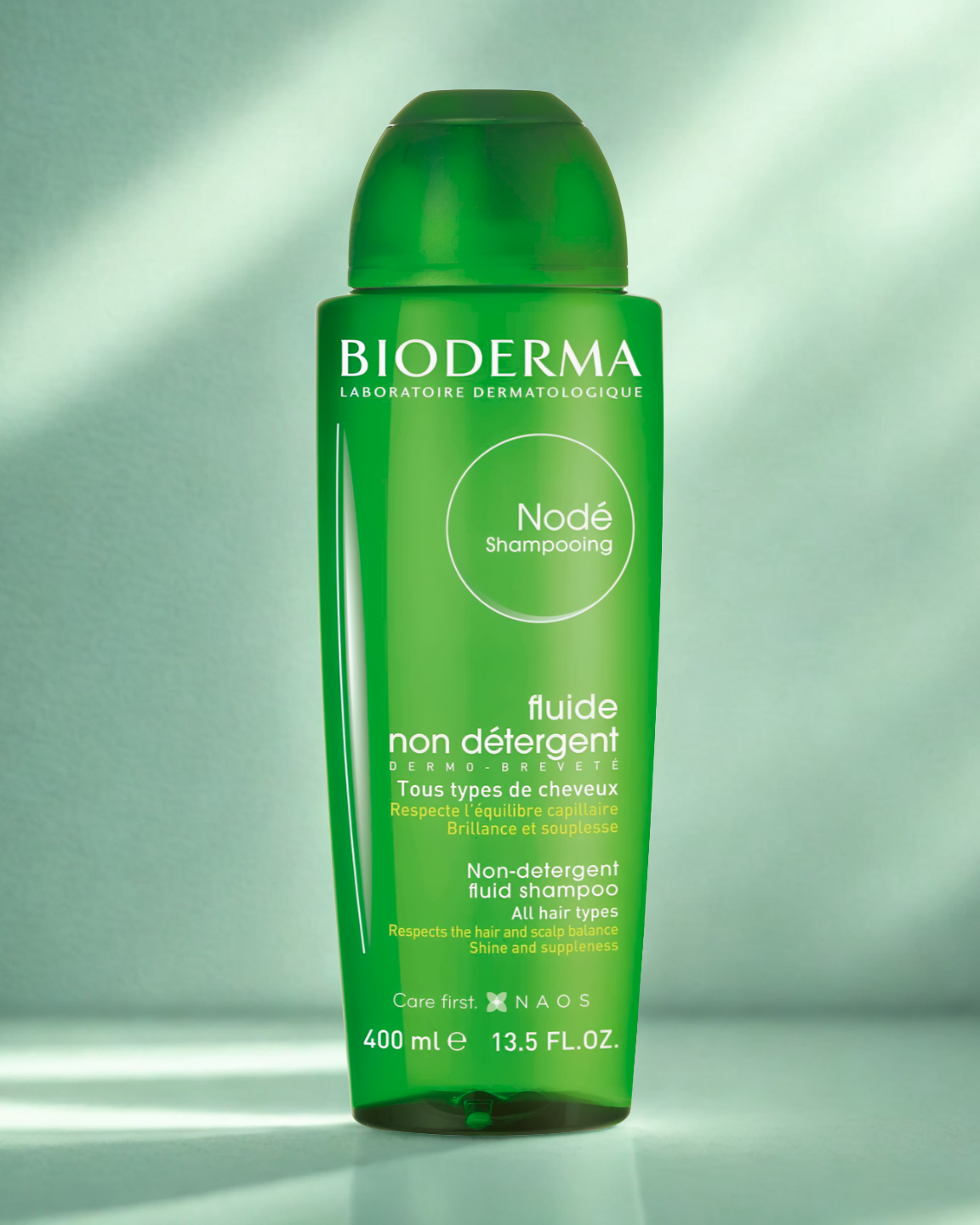
Bioderma Nodé Shampooing Fluide
An excellent daily or frequent-use shampoo, Nodé Fluid cleanses without stripping natural oils. Its non-detergent formula helps preserve the hair’s lipid layer, reducing dryness and breakage — ideal for fragile, damaged hair shafts.
Important: These products support hair strength and comfort but must be combined with lifestyle and styling changes to see lasting improvement.
All recommended products are available at The Watermelon.
Lifestyle and Hair Habits That Make a Real Difference
Managing Trichorrhexis Nodosa successfully requires consistency. Small daily choices matter more than expensive treatments.
- Wash hair with lukewarm water
- Pat dry with a soft towel instead of rubbing
- Limit heat styling and always use heat protection
- Detangle gently with wide-tooth combs
- Avoid tight ponytails or braids
- Nourish hair with conditioners that improve slip and elasticity
With time, healthy hair growth will replace damaged strands.
Prognosis: What to Expect Long-Term
The outlook for Trichorrhexis Nodosa is excellent when the cause is acquired and damage is minimized. Hair follicles remain intact, so once harmful practices stop, new hair grows normally.
Improvement usually becomes noticeable within 3–6 months, depending on hair growth rate and severity of previous damage. Patience is key — hair health improves from the root outward.
Frequently Asked Questions (FAQ)
Q: Is Trichorrhexis Nodosa permanent?
No. Acquired Trichorrhexis Nodosa is usually reversible once damaging habits are stopped and new hair grows in healthy.
Q: Does Trichorrhexis Nodosa cause hair loss?
It causes hair breakage, not true hair loss. The follicles remain healthy.
Q: Can oils or masks fix the condition?
They can improve softness and reduce friction, but they don’t repair damaged hair shafts. Prevention and gentle care are key.
Q: Should I cut my hair?
Trimming damaged ends can help reduce breakage while healthier hair grows in.
Q: When should I see a dermatologist?
If breakage is severe, sudden, or accompanied by other symptoms like fatigue or thinning, medical evaluation is advised.
Final Thoughts
Trichorrhexis Nodosa may look discouraging, but it’s one of the most manageable hair disorders when approached correctly. Understanding that the issue lies in the hair shaft — not the scalp or follicle — is the first step toward recovery.
By eliminating damaging practices, nourishing hair gently, and choosing dermatologist-approved products from Bioderma and Esthederm available at The Watermelon, you can restore hair strength, reduce breakage, and finally see the length and health you’ve been working toward.
0 تعليقات